

The Window in the Wall: Paul and the Ancient Motif of Escape
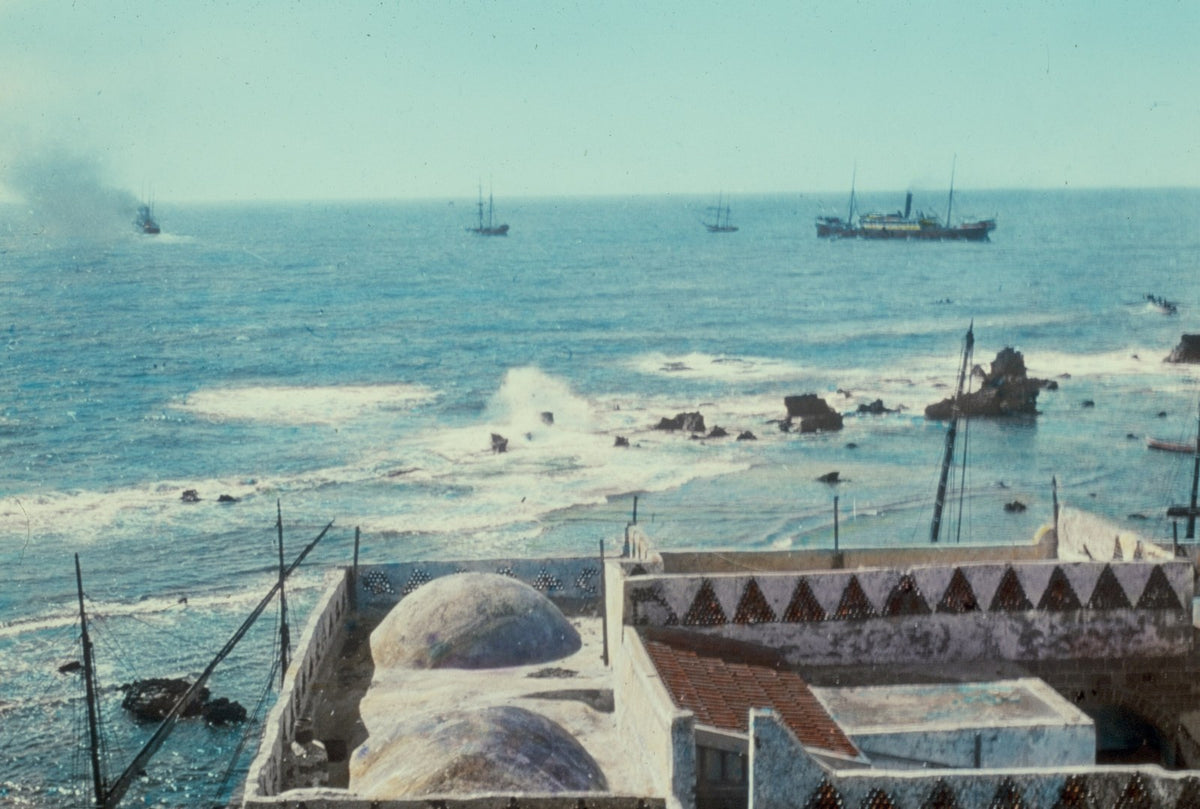
Pictured above: The house and window on the Damascus wall that travellers around 1910 were shown as Paul's window. Even the lecture notes that came with this slide admitted the house stands on a much later wall. Lantern slide, c. 1910, OSU Special Collections and Archives, no known copyright restrictions, via Wikimedia Commons.
When we talk about the Apostle Paul being lowered in a basket from the walls of Damascus to escape execution, we often read it as just a quirky, historical adventure.
But in the ancient Near Eastern and biblical world, being lowered from a window in a city wall in a basket wasn't just a random logistical detail. When Paul (in 2 Corinthians 11) and Luke (in Acts 9) both go out of their way to record these specific mechanics, they are flashing giant neon signs to 1st-century Jewish readers.
They are deliberately linking Shaul of Tarsus to three of the most famous escapes in the Hebrew Bible.
Echo 1: Moses and the Teivah
The moment a basket becomes the vehicle of salvation for a hunted man, the biblical mind immediately jumps to the greatest prophet in Jewish history: Moses.
In Exodus 2, to save her son from Pharaoh's death decree, Yocheved takes a papyrus basket (a teivah), coats it in pitch, and places the infant Moses among the reeds of the Nile. Centuries later, Paul is trapped inside Damascus. To save his life, his disciples place him in a wicker basket (a sargane) and lower him down the city wall.
The theological resonance is unmistakable: the basket is the ultimate symbol of total vulnerability. Great deliverers aren't saved by armies or armored chariots; they are stripped of all their power and reduced to hiding in fragile, woven reeds before being sent into the wilderness to prepare for their true mission.
Echo 2: Rahab and the Spies
Once the basket is in motion, we hit the second motif: the window in the wall.
In Joshua 2, the Israelite spies are trapped inside the Canaanite fortress of Jericho. When the king of Jericho sends soldiers to capture them, Rahab hides them on her roof. To save them, the text says: "She let them down by a rope through the window, for the house she lived in was part of the city wall."
The motif here is clear: God's messengers are trapped behind enemy lines in a pagan stronghold. A daring escape through a window allows them to survive, return to their camp, and eventually conquer the land. By framing Paul's escape this way, the text signals that Paul is the new scout behind enemy lines, preparing for a new kind of spiritual conquest in the Gentile world.
Echo 3: The Ultimate Irony of Benjamin
The final biblical echo is an absolute literary masterpiece, especially for a Pharisee who was incredibly proud of his tribal lineage.
Paul’s Hebrew name was Shaul (Saul), and he was from the tribe of Benjamin (Philippians 3:5). In the Tanakh, the most famous Shaul from the tribe of Benjamin was Israel's first king.
In 1 Samuel 19, King Shaul goes mad with jealousy and sends assassins to watch David's house to kill him. To save him, the text says Michal "let David down through the window, and he fled away and escaped."
The literary reversal here is stunning. In the Hebrew Bible, Shaul of Benjamin is the mad king surrounding the walls, and the righteous man must be lowered through a window to escape him. Hundreds of years later, the roles are entirely reversed: Shaul of Benjamin is now the righteous man being hunted by a mad king (King Aretas of Nabatea), and he must be lowered through a window to survive.
The Takeaway
To a 1st-century Jewish mind trained in the art of Midrash, these details weren't just historical trivia—they were proof of divine providence. By framing Paul's escape with the exact imagery of Moses, the Jericho spies, and King David, the text is declaring that Paul is stepping into the great, continuous narrative of Israel's history. He isn't a rogue operator inventing a new religion; he is walking exactly where the heroes of the Tanakh walked.
Verse of the Day
καὶ διὰ θυρίδος ἐν σαργάνῃ ἐχαλάσθην διὰ τοῦ τείχους καὶ ἐξέφυγον τὰς χεῖρας αὐτοῦ.
"But I was lowered in a basket from a window in the wall and slipped through his hands." 2 Corinthians 11:33
The Temple Mount Soil Team
Keepsakes from the same soil
Each piece carries authenticated soil recovered by the Temple Mount Sifting Project, sealed in Israel and matched to its own numbered Certificate of Authenticity.
 Covenant Soil Bracelet$39 Covenant Soil Bracelet$39 |
 The Pendant of Eternal Faith$69 The Pendant of Eternal Faith$69 |
 The Classic Gift Set$99 The Classic Gift Set$99 |
The Temple Mount Hourglass is open for Christmas presale
Ships by November 25, free shipping within the US.