

Add a gift message
Write a few words for the person receiving this keepsake. We send your message by email or text when the gift arrives, or on a date you choose.

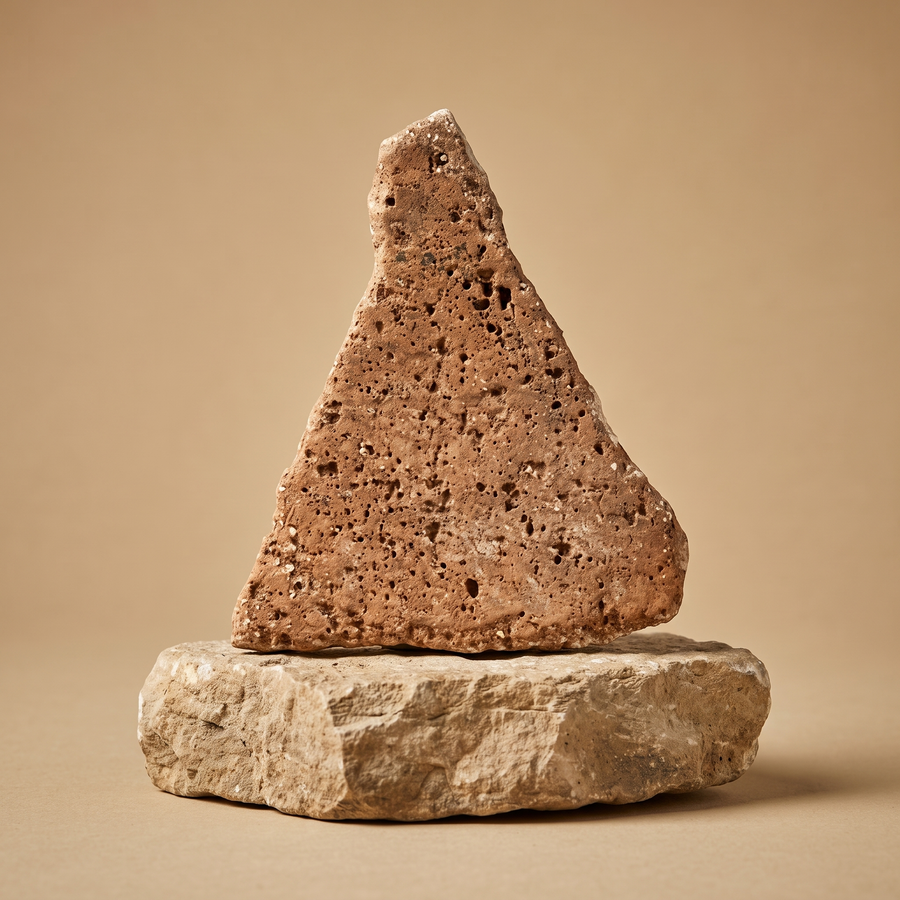
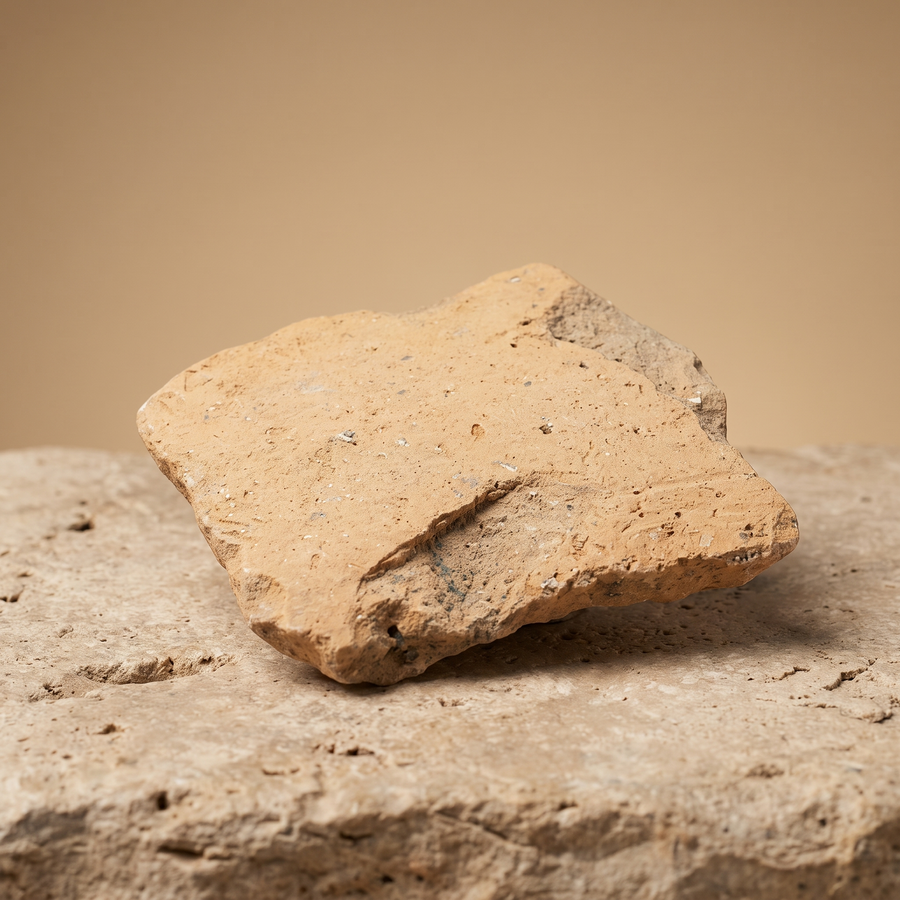
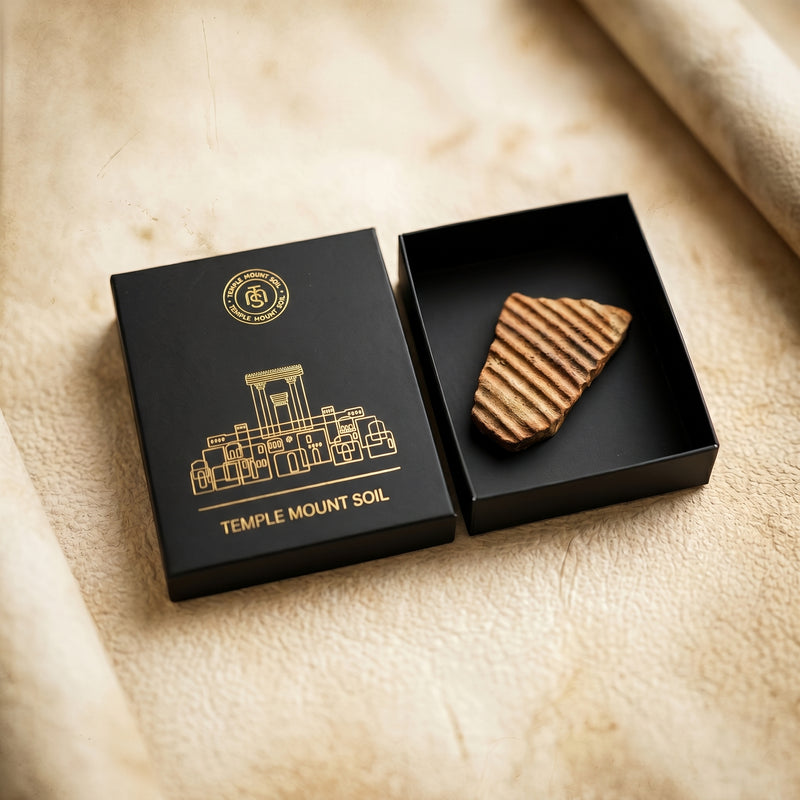
An authentic pottery shard excavated at Tel Shiloh, dating to the Bronze and Iron Ages (3300-586 BC), the era of the Tabernacle, the Judges, and the kings of Israel. A fragment of the city where the Ark of the Covenant rested.
A fragment of fired clay from Tel Shiloh, shaped on a potter's wheel during the Bronze and Iron Ages (3300–586 BC). Someone formed this vessel, fired it in a kiln, and used it in the hill country of Ephraim thousands of years ago. The break is ancient. The clay is original. The hand behind it was real.
There is a reason the earliest fragments are the most prized. The deeper an excavation goes, the less survives; clay that has endured three thousand years of conquest, fire, and rebuilding is far scarcer than the pottery of later centuries. A Bronze and Iron Age shard is among the rarest pieces Shiloh yields, and only a small number can be offered.
Shiloh was ancient Israel's first capital. "The whole congregation of the children of Israel assembled together at Shiloh, and set up the tabernacle of the congregation there" (Joshua 18:1). For 369 years, according to the Talmud (Zevachim 118b), the Tabernacle stood at Shiloh. It was here that Hannah prayed for a son and dedicated Samuel to God: "For this child I prayed" (1 Samuel 1:27).
Pottery from these centuries belongs to the world of the Judges and the kings of Israel and Judah. When Jeremiah wanted to shake Jerusalem awake, he pointed to this very place: "Go now to My place which was in Shiloh, where I set My name at the first" (Jeremiah 7:12). This shard comes from those layers of history.
Each shard is individually selected and documented. No two fragments are alike, so the piece you receive will have its own shape, texture, and story: a genuine artifact from the city where the Ark of the Covenant rested.
Recovered in the excavation and sifting of Tel Shiloh. Each piece is individually selected and documented, and arrives with its own numbered Certificate of Authenticity signed by Benjamin Har-Even, Director of Archaeology in Judea and Samaria.
Ships directly from Israel with tracking. Not satisfied? Return within 90 days for a full refund, no questions asked.
For three centuries before Jerusalem, Shiloh was the center of Israel's worship, the hill where the Tabernacle stood and the Ark of the Covenant rested. The pottery its people left behind is finite: every piece must be excavated, classified, and documented before it can leave Israel, and very little of it ever reaches us.
Every piece arrives with a numbered Certificate of Authenticity signed by Benjamin Har-Even, Director of Archaeology in Judea and Samaria.


Wees die eerste om te hoor van nuwe vrystellings, beperkte uitgawes en eksklusiewe aanbiedinge van Temple Mount Soil