


Shiloh Pottery Shard - Handles
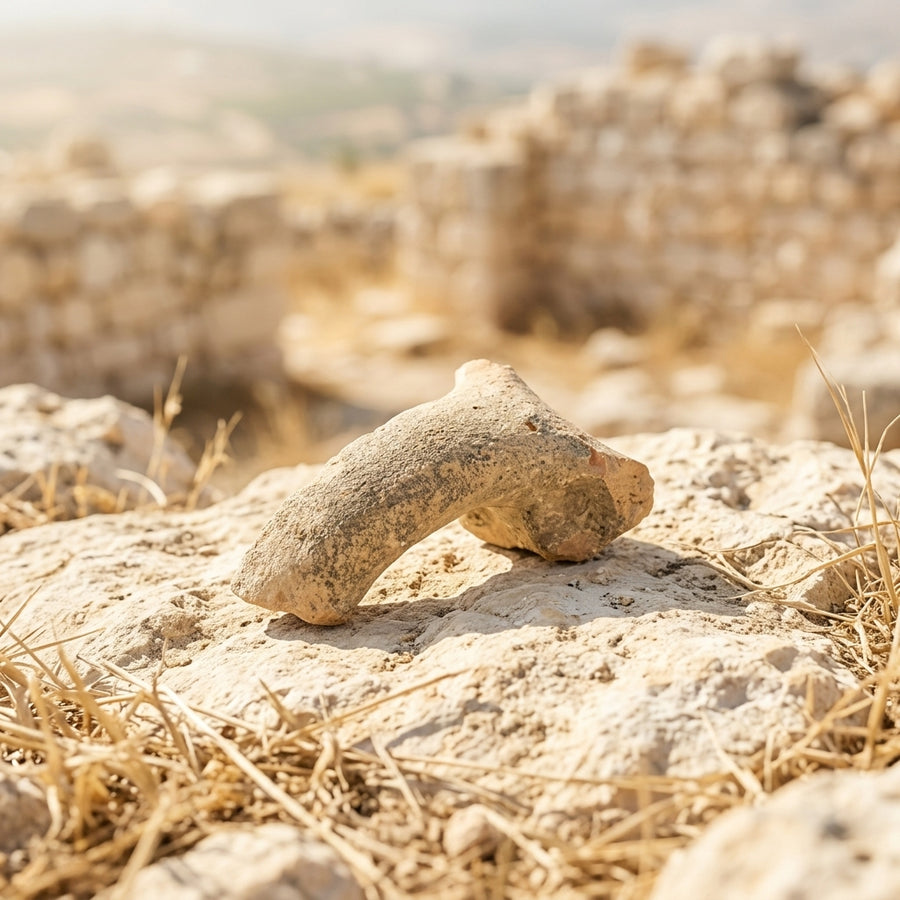
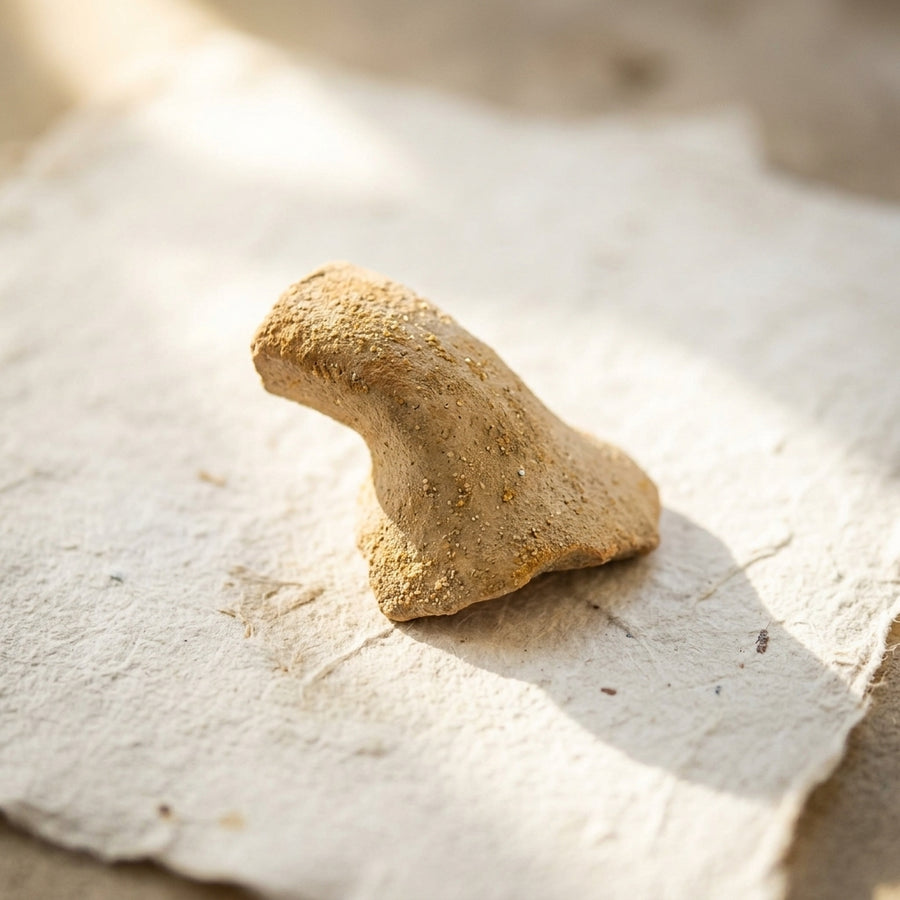
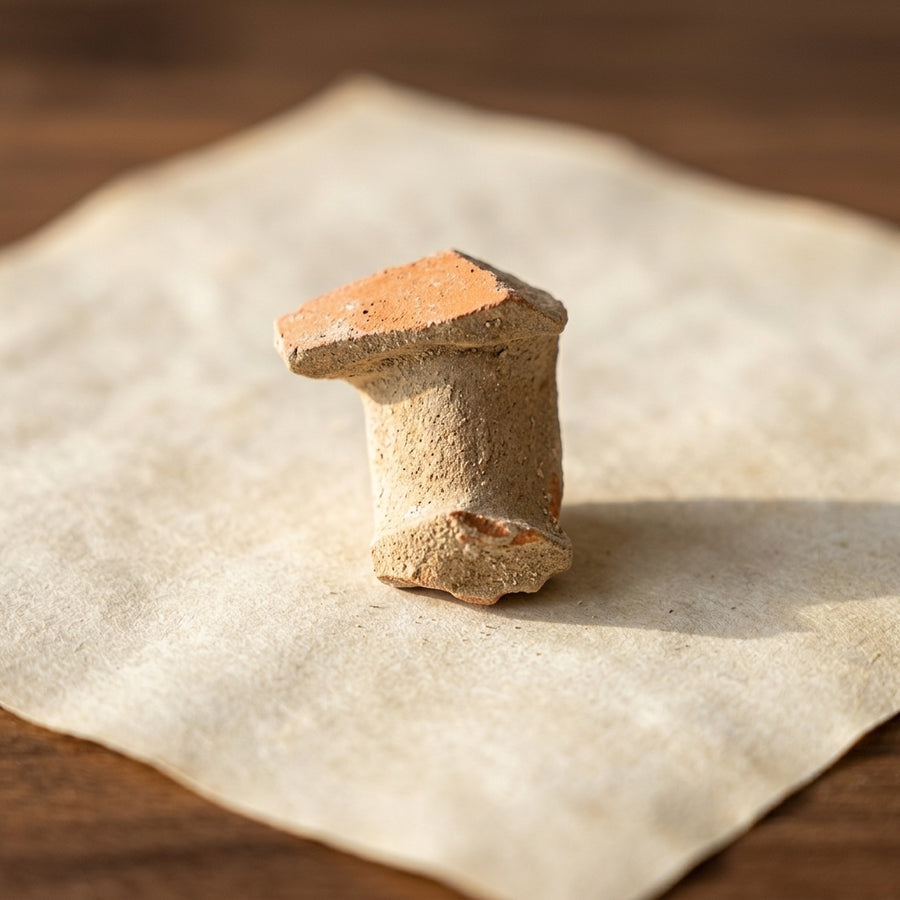
An original, authentic pottery handle excavated at Tel Shiloh, the rarest class of shard recovered, preserving the ancient potter's grip in fired clay, from vessels spanning the Bronze and Iron Ages through the Roman and Late Roman periods. Hold it where the ancient potter held it.
Package contains
The story of this piece
The handle is the most personal part of any ancient vessel. To make one, the potter rolled a coil of wet clay, pressed it against the jar wall, and smoothed the joins with his thumbs. Those finger marks often survive in the fired clay. When you grip an authentic handle from Tel Shiloh, you place your fingers exactly where the potter placed his.
A handle is also the rarest kind of find. Every jar had walls all around but only a handle or two, so for each handle the soil returns, it gives up plain body shards by the basketful. Archaeologists prize handles as the most telling fragments, preserving the twist of the coil, the pressure of the attachment, sometimes even a fingerprint. That is why handles are the scarcest class of shard we offer, and why they carry the collection's highest price. This is the collector's piece, and the one we expect to run out of first.
These are original handles excavated at Shiloh, the city where Joshua set up the Tabernacle (Joshua 18:1) and where Hannah prayed for the son who would become the prophet Samuel (1 Samuel 1). The vessels they once carried span the city's long history, from the Bronze and Iron Ages (3300-586 BC) through the Roman and Late Roman periods (63 BC to the 6th century AD). For all those centuries, jars like these hauled water, wine, oil, and grain up the same slopes where the Ark of the Covenant rested.
Each handle is authentic, one of a kind, individually selected, and documented. No two are alike, so the piece you receive will have its own shape, texture, and story.
Product dimensions
Authentication & provenance
Recovered in the excavation and sifting of Tel Shiloh. Each piece is individually selected and documented, and arrives with its own numbered Certificate of Authenticity signed by Benjamin Har-Even, Director of Archaeology in Judea and Samaria.
Shipping & returns
Ships directly from Israel with tracking. Please allow 12 business days for delivery. Not satisfied? Return within 90 days for a full refund, no questions asked.
Each piece exists exactly once
For three centuries before Jerusalem, Shiloh was the center of Israel's worship, the hill where the Tabernacle stood and the Ark of the Covenant rested. The pottery its people left behind is finite: every piece must be excavated, classified, and documented before it can leave Israel, and very little of it ever reaches us.
Every piece arrives with a numbered Certificate of Authenticity signed by Benjamin Har-Even, Director of Archaeology in Judea and Samaria.


Complete the collection


